
Teknologiens antropologi
Teknologiens antropologi
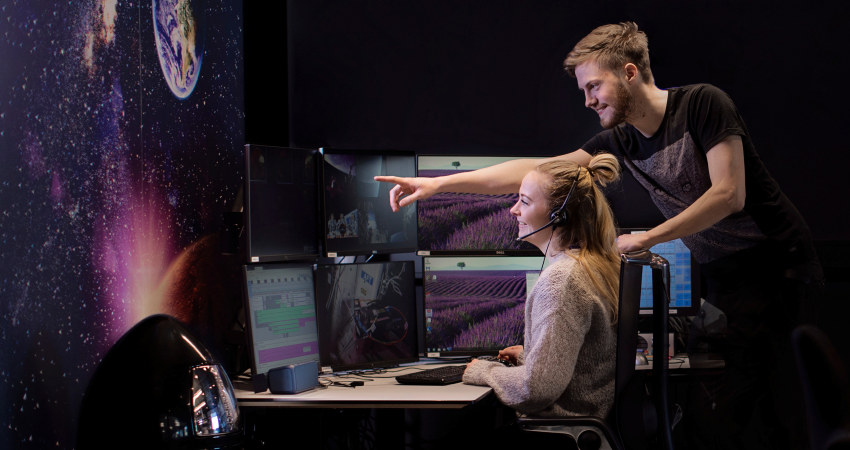
Forskningsgruppen utforsker og forstår vår tids verden ut fra utvikling og implementering av teknologier med tilhørende sosiale intensjoner og vyer. Vi retter blikket mot kulturelle aspekter ved teknologi og innovasjon, gjennom studier som spenner fra konkrete og spesifikke teknologisituasjoner til teknologi som grunnleggende verdensanskuelse og forutsetning for samtidens kulturelle logikk.
Vi ønsker å være den foretrukne samarbeidspartneren ved satsninger som inkluderer utforskning av teknologi og innovasjon som kulturell logikk, og vi inngår i både nasjonale og internasjonale samarbeid der teknologi undersøkes eller står sentralt i undersøkelsene.
Et mål er å være tilstede i teknologiske hot-spots - som NTNUs teknologimiljøer, og samtidig stå for grunnleggende kritikk og distanse.
Spennet mellom nærhet og distanse preger vår empiriske forankring, som i høy grad er etnografisk og basert på feltarbeid. Vi søker å forstå generering og reproduksjon av ulike typer sosiale former gjennom kulturspesifikke tankeformer og individuelle handlinger der teknologi på ulike nivå spiller inn; fra sårbare menneskers møte med nedtrekksmenyer gjennom teknologisk forvaltning og sosiale teknologier, via roboters inntog i arbeidslivet og undervisning, til miljøer rundt utvikling av teknologi; situasjoner som gjennom en slags «empirisk filosofi» forteller noe om hva det vil si å være mennesker i teknologienes tidsalder.
Forskningsgruppen Teknologiens antropologi legger vekt på å kople forskning og undervisning så tett som mulig, både ved å involvere studenter i forskning, og involvere pågående forskning i undervisningen.
Podcastserie

Her er en lenketil vår
podcastserie, Teknologikken:
https://teknologikken.simplecast.com
Forskningsprosjekter vi er involvert i:
EMERGE Centre for Student-Active Learning and Emerging Technologies
EMERGE Centre for Student-Active Learning and Emerging Technologies
Interdiciplinary centre at SU-NTNU
https://www.ntnu.edu/igs/emerge
In a world characterized by rapid transformations of technology, society and culture, we want to establish a practice for continuous, systematic development of education, to keep up with the world. At the front are the students themselves as explorers of emerging technologies and ways of learning. The goal is to improve universities, and other learning institution’s ability to facilitate continuous development of learning methods. This involves technology, organization, rooms, methods of learning and assessment. A dialogical teacher-student-relation is central, motivated by shared matters-of-concern in the exploration of an emerging world. We achieve this through an experimental approach to teaching wherein the classroom is considered as a “laboratory”, where we not only learn together, but also discover how to learn. The annual cycles of experimentation is at the heart of EMERGE, gathering, engaging, developing and making available existing recourses of education.
Contact: Håkon Fyhn
MultiFutures: Multidimentional Transition Pathway Analysis for Sustainable Futures
MultiFutures: Multidimentional Transition Pathway Analysis for Sustainable Futures
MultiFutures jobber for å systematisk utvide handlingsrommet for politiske tiltakt rettet mot et bærekraftig samfunn, ved å vurdere og utvikle overgangsscenarier basert på alternative økonomiske paradigmer.
Kontakt: Jens Røyrvik
Limits to Digitalization (L2D)
Limits to Digitalization (L2D)
Limits to Digitalization (L2D): Håpet om energiomstilling avhenger av digitaliseringens evne til å dematerialisere. Imidlertid er det digitale materielt. «Skyen» er blitt en metafor, men består i stor grad av håndfast infrastruktur og datasentre som er avhengige av menneskelige og miljømessige ressurser. Deres oversette massive og økende fotavtrykk truer samfunnets bærekraft. Ved å se forbi sky-metaforer, adresser L2D datasentrenes fotavtrykk og konflikter. Med sjelden tilgang til en hemmelighetsfull bransje og deltakelse fra politikere med motstridende digitale agendaer, bygger L2D kunnskap om digitaliseringens rolle i Norges energiomstilling
Kontakt: Jens Røyrvik
Bringing real life into virtual classrooms
Bringing real life into virtual classrooms
EEA project in collaboration with West University Timisuara, part of the EMERGE centre
The ClassroomLab is a classroom where selected courses are taught, an infrastructure for conducting experiments in teaching and methodology methods, and finally an arena for collaboration between students, teachers, researchers and the world of work.
The overarching aim of ClassroomLab project is to integrate education at WUT and NTNU through the design of pioneering interdisciplinary modules that, through multiplier effect, will be incorporated into new graduate programs and relevant existing training schemes proposed by institutions with varying orientations, in order to address the rapidly altering need to cope with challenges related to work integration and marginalization of vulnerable persons.
Contact: Håkon Fyhn / Trond Berge
Fagsosial tilstedeværelse på hybrid campus
Fagsosial tilstedeværelse på hybrid campus
(Academic social presence on the hybrid campus)
Interdisciplinary project supported by Fremtidens Campus and part of the EMERGE centre
How to facilitate academic-social presence among students on a hybrid campus? Ethnographically based study on the importance of subject-social interaction for learning and development - or: what should NTNU do with a campus?
Contact: Mathias Tømmervold
AUTOWORK Workers in transition through automation, digitalization and robotization of work
AUTOWORK Workers in transition through automation, digitalization and robotization of work
We are now at a point in time when digital technologies are changing societies and work-life. Increasingly advanced, complex, and intelligent machines prove capable of performing work previously mastered by humans alone. The effects and implications of this for both individual workers and society are not yet known. AUTOWORK, an exciting collaboration between NTNU Norwegian University of Science and Technology and Monash University in Australia, will explore this transformation across three sectors poised to be particularly impacted by automation: Building, Sale and Service, and Healthcare.
Contact: Håkon Fyhn
CURE Conceptualizing and Understanding Resistance against Energy Policy and Technology
CURE Conceptualizing and Understanding Resistance against Energy Policy and Technology
Energy transitions are changing society in fundamental ways – it involves not only changes in the production, distribution and consumption of energy but significant social and behavioural transformations as well that may question our understandings of democracy. There is consensus that in order for these measures to be efficient and successfully implemented they must be accepted by the public. However, despite the focus on acceptance by scholars and practitioners, active resistance towards low carbon policies and technologies seems to be increasingly widespread and visible at all societal levels.
Contact: Håkon Fyhn / Jens Røyrvik
BIAS Mitigating biases of AI in the labor market
BIAS Mitigating biases of AI in the labor market
Artificial Intelligence is increasingly deployed in the labor market to recruit, train, and engage employees or monitor for infractions. Therefore, the BIAS project will investigate its use in this context. The project will also study how human and societal biases are potentially reproduced in Al-based systems and develop tools to identify and mitigate these biases.
Contact: Håkon Fyhn
ENCHANT - Energy Efficiency through behaviour Change Transition
ENCHANT - Energy Efficiency through behaviour Change Transition
https://samforsk.no/prosjekter/enchant-energy-efficiency-through-behaviour-change-transition
ENCHANT – Energy Efficiency through behaviour Change Transition – is a project that aims to support the energy transition by testing the impact of interventions affecting energy consumption behaviour on a large-scale across Europe. The interventions will be developed, fitted, and tested with the objective to unlock an energy efficiency potential in the public, through behavioural change.
Contact: Jens Røyrvik
DIALOGUES - Energy citizenship for a sustainable future
DIALOGUES - Energy citizenship for a sustainable future
https://www.dialoguesproject.eu
In order to reach the ambitious challenges of the European Union’s Green Deal and the Paris Agreement to make Europe the first carbon neutral continent by 2050 while also driving innovation and job growth, swift action is needed involving a broad range of actors.
Contact: Jens Røyrvik
HighEFF
HighEFF
https://www.sintef.no/projectweb/higheff/
HighEFF has defined ambitious goals for development and demonstration of technologies that may improve energy efficiency and reduce emissions from industry.
Contact: Jens Røyrvik
MASQ - Exceeding the limitations of quality management in municipal health and care services
MASQ - Exceeding the limitations of quality management in municipal health and care services
Contact: Jens Røyrvik
Ph.d. prosjekter
To Keep Available: Immigration Detention Work in Sweden
To Keep Available: Immigration Detention Work in Sweden
Aina Bäckman
The project explores the labor that goes into immigration detention in Sweden. This anthropological undertaking draws on attendance at Sweden’s six detention centers in 2019 and aims to raise questions about the productive scenarios by which detention and deportations are realized.
Contact: aina.backman@ntnu.no
Møtestanden
Møtestanden
Alexander Berntesen
PhD.-prosjekt som forsøker å utfordre synet på motstand som psykologisk intensjon med dertilhørende eksternalisert aktivisme, og heller forstå motstand ontologisk som møte. Del av CURE projectet.
Contact: alexander.berntsen@ntnu.no
Craftsmanship in the age of automatio
Craftsmanship in the age of automatio
Kristoffer Nergaard
Prosjektet løfter opp igjen en gammel diskusjon om automatisering, og gjenåpner spørsmål knyttet til ferdigheter, status og identitet i håndverksyrker, med innføringen av stadig nye AI-drevne, digitale teknologier og roboter i byggebransjen. Det handler derfor om automatiseringens menneskelige konsekvenser, om hvordan arbeidere og arbeid i byggebransjen påvirkes av endringer i teknologi, nye materialer, nye verktøy og nye organiseringsformer. Prosjektet ser på historiske endringer i byggebransjen, samt utforsker nåtidige praksiser, teknologier og kunnskap i den norske byggebransjen med særlig fokus på ferdighetene til snekkere og tømrere. Prosjektet tar et sosiomaterielt perspektiv, inspirert av STS-tradisjoner, samt har et antropologisk komparativt blikk. I fokus er særlig hvordan Automatisering som begrep kan forstås som ikke bare en teknisk prosess, men også en sosial endringsprosess over tid. Del av AUTOWORK projektet
Contact: kristoffer.nergard@samforsk.no
Bytesized: Digital Transformations in Higher Education
Bytesized: Digital Transformations in Higher Education
Marie oppdal Ulset
One of the focal points in this research project is the production, exchange and automation of knowledge within higher education. Technology has impacted structures of learning for educators and students. In particular, with the rise of artificial intelligence, core-teachings and examination principles are challenged.This has set departments into ontological crisis by an inevitable self-examination of “What do we want our students to learn and how?”. Part of the EMERGE center
Contact: marie.o.ulset@ntnu.no
Hvordan forvalte felleskapsverdier i by: byallmenninger, medvirkning og eierskap på Fornebu
Hvordan forvalte felleskapsverdier i by: byallmenninger, medvirkning og eierskap på Fornebu
Trine Olsen Møgster
Et etnografisk studie av samarbeidet mellom grunneiere, kommunen og innbyggere i utviklingen av Fornebu.
Contact: trine.o.mogster@ntnu.no
Student publikasjoner SANT2026 - Teknologiens antropologi
TEKNOLOGI-ANTROPOLOGI-ANTOLOGI
TEKNOLOGI-ANTROPOLOGI-ANTOLOGI
- TEKNOLOGI-ANTROPOLOGI-ANTOLOGI #1: Om det å være menneske i teknologiens tidsalder
- TEKNOLOGI-ANTROPOLOGI-ANTOLOGI #2: Digitaliseringens megarektiske potensial
- TEKNOLOGI-ANTROPOLOGI-ANTOLOGI #3: Reduksjoner til det absurde
- TEKNOLOGI-ANTROPOLOGI-ANTOLOGI #4: Virkeligheten på stell
Medlemmer
-
Trond Berge
73598214 trond.berge@ntnu.no -
Alexander Berntsen Stipendiat
73592398 alexander.berntsen@ntnu.no Institutt for geografi og sosialantropologi -
Håkon Fyhn Førsteamanuensis
73591338 +4791743561 hakon.fyhn@ntnu.no Institutt for geografi og sosialantropologi -
Synne Svinsås Gjønnes Stipendiat
+4791583053 synne.s.gjonnes@ntnu.no Institutt for geografi og sosialantropologi -
Kristian Finsveen Liven Stipendiat
kristian.f.liven@ntnu.no Institutt for geografi og sosialantropologi -
Kristoffer Nergård kristoffer.nergard@samforsk.no
-
Jens Olgard Dalseth Røyrvik Førsteamanuensis
jens.royrvik@ntnu.no Institutt for geografi og sosialantropologi -
Hans Martin Thomassen Førsteamanuensis
73413055 +4799501786 +4773598215 martin.thomassen@ntnu.no Institutt for geografi og sosialantropologi -
Marie Opdal Ulset Gjesteforeleser
marie.o.ulset@ntnu.no Institutt for geografi og sosialantropologi
